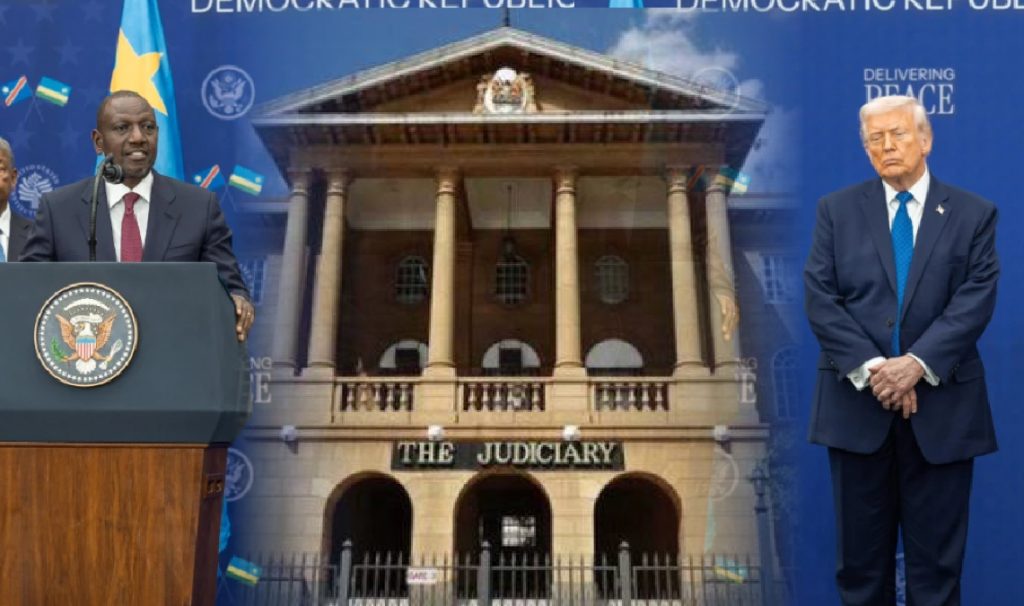
NAIROBI — In a dramatic late-night ruling, the High Court of Kenya has put the brakes on a controversial plan by the United States government to use Kenya as a holding ground and quarantine zone for American citizens exposed to the deadly Ebola virus.
High Court Judge Patricia Nyaundi issued conservatory orders late Thursday, completely blocking the Kenyan government from setting up, approving, or operationalizing any Ebola treatment or isolation centers tailored for foreign nationals under agreements with the U.S. or any other country.
The court’s sweeping order also strictly bars Kenyan authorities from allowing anyone exposed to or infected with Ebola into the country under the disputed agreement.
“We Cannot Allow Ebola Cases to Enter the U.S.”
The legal showdown began just hours after the Trump administration proudly announced it was setting up a 50-bed quarantine and biocontainment facility in Kenya, staffed by the U.S. Public Health Service.
Faced with a rapidly spreading outbreak of a rare, non-vaccine-preventable strain of Ebola (the Bundibugyo strain) in the neighboring Democratic Republic of Congo (DRC) and Uganda, U.S. officials openly stated they wanted a nearby base to manage exposed Americans rather than bringing them home.
During a Cabinet meeting on Wednesday, U.S. Secretary of State Marco Rubio defended the hardline stance, declaring
“We cannot and will not allow any cases of Ebola to enter the United States.”
The U.S. government cited logistical difficulties and the dangers of long-haul flights from Central Africa to America as the primary reasons for choosing Kenya.
The Backlash: Secret Deals and Public Health Risks
The U.S. plan sparked instant outrage, both from global health experts who called it “unethical and irresponsible” to maroon citizens abroad, and from Kenyan civil society.
The Katiba Institute, a Kenyan constitutional rights organization, filed an emergency petition that ultimately led to the High Court’s intervention. Legal counsel Joshua Malidzo argued that the executive branch had secretly brokered a deal that placed foreign political expediency over the lives and safety of Kenyan citizens.
According to the Katiba Institute, the government bypassed critical constitutional requirements, including:
- Public Participation: Citizens and local medical bodies were completely left in the dark.
- Parliamentary Oversight: The deal skipped legislative review entirely.
- Environmental & Biosafety Assessments: No proof was provided that Kenya—which lacks extensive Level-4 biocontainment infrastructure—could safely manage a highly contagious hemorrhagic fever outbreak without putting its own public health system at risk.
What Happens Next?
Judge Nyaundi has demanded that Kenya’s Cabinet Secretary for Health present a comprehensive Ebola contingency plan to the court within 24 hours, detailing exactly how the country plans to survey and control potential outbreaks. Furthermore, the court is compelling the state to fully disclose all terms, negotiations, and public health assessments conducted with the U.S. government.
The ruling has temporarily checked Washington’s efforts to externalize its pandemic border controls to African soil. For now, the first cadre of U.S. public health personnel—who were reportedly already en route to Kenya—will have to wait as the law places a firm “stop” sign on the tarmac.